
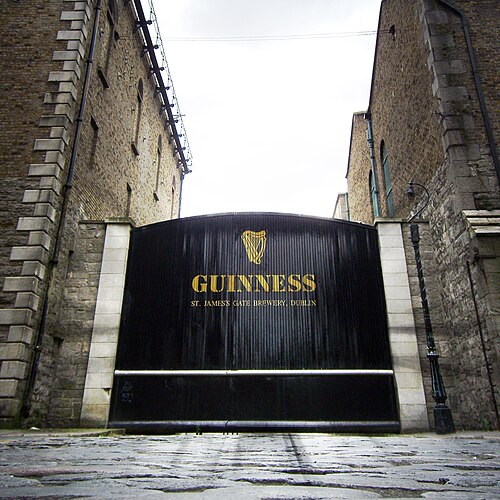
In Dublin, Guinness discovered a rather splendid way of making money. First, it sells the world its famous black stout. Then, it charges tourists at least €24 to discover how the family behind it became fabulously wealthy.
And judging by the crowds at St James’s Gate, nobody seems particularly bothered about paying.
More than 260 years after Arthur Guinness signed one of the most extraordinary leases in commercial history, his old brewery has become one of Ireland’s best-known tourist attractions, a marketing machine and a valuable part of a global drinks business.
The family has long since surrendered control. The fortune has passed through generations, the company has changed hands and Guinness now belongs to multinational drinks giant Diageo.
The story, though, is still earning its keep.
For Cyprus, which has its own brewing institution in Keo, centuries of winemaking history and a tourism industry searching for ways to make visitors spend more, there is a rather interesting business lesson in all this.
The Guinness story began with Arthur, the son of a land steward in County Kildare, who received a £100 inheritance from Archbishop Arthur Price.
It was enough to establish his first brewery in Leixlip. Then, on December 31, 1759, Arthur moved to Dublin and signed a lease on a disused four-acre brewery at St James’s Gate.
The annual rent was £45. The lease was for 9,000 years.
Quite what possessed him to negotiate a tenancy lasting almost nine millennia is anybody’s guess. But Arthur clearly had little intention of leaving.
He was not entirely easy to deal with, either. According to the Guinness archives, when Dublin Corporation attempted to interfere with the brewery’s water supply, he reportedly seized a pickaxe from a worker and made his objections clear in rather colourful language.
Business negotiations were evidently conducted somewhat differently in the 18th century.
Arthur married Olivia Whitmore in 1761, and the couple had ten children, nine of whom survived into adulthood.
Meanwhile, the brewery was finding its feet. Arthur recognised the growing popularity of porter, a dark beer from London, and by 1799 had abandoned ale production to concentrate on the more promising product.
Exports followed, including West India Porter in 1801, a stronger beer designed to withstand lengthy sea voyages.
What had begun as a modest brewery was becoming an international business.
When Arthur died in 1803, his son, Arthur Guinness II, took over, eventually becoming governor of the Bank of Ireland in 1820.
But money and influence did not spare the family the occasional headache.
The economic downturn following the Napoleonic wars hurt sales, while Arthur II’s political disagreements with Daniel O’Connell provoked a boycott of Guinness. Barrels were smashed and the brewery came under attack.
His son, Benjamin Lee Guinness, subsequently expanded the business across Britain and became one of Dublin’s wealthiest men. He also contributed £150,000 towards restoring St Patrick’s Cathedral.
When Benjamin died in 1868, his estate was worth approximately £1.1 million, then the largest will proved in Ireland.
His sons inherited the brewery, although they had rather different interests.
Arthur Edward preferred politics and property, eventually purchasing St Stephen’s Green and opening it to the public.
Edward Cecil, meanwhile, preferred making money from beer.
He bought his brother’s share in 1876, transforming Guinness into the world’s largest brewery before taking it to the London Stock Exchange in 1886.
The response was extraordinary.
According to his Irish biography, applications for shares exceeded £100m, a staggering expression of investor appetite for a business that had started with a £100 inheritance.
Edward became one of the richest men in Britain and Ireland, later receiving the title of Earl of Iveagh. His fortune also financed public housing, including a £250,000 trust established in 1890 for working-class families in Dublin and London.
By then, the Guinnesses were considerably more than brewers. They were financiers, politicians, landowners and philanthropists, their wealth giving them influence across Irish and British society.
And while their charitable work was substantial, so was the private fortune.
When Edward died in 1927, his estate was valued at approximately £11m.
The family’s involvement in the business continued well into the 20th century, although Benjamin Guinness became its last family chairman when he stepped down in 1986.
By then, Guinness had conquered international markets through exports, memorable advertising and innovations such as Guinness Draught and the famous widget inside its cans.
The corporate transformation came in 1997, when Guinness plc merged with Grand Metropolitan in a deal valued at approximately £24 billion, creating Diageo.
The family was out of the brewing business. Its name, however, remained enormously valuable.
And the latest figures explain why.
According to Diageo’s 2026 results, the group recorded $19.64bn in net sales for the financial year ending June 30.
That figure covers the entire Diageo portfolio, rather than Guinness alone.
It was a difficult year for the multinational, with reported sales falling 3 per cent and operating profit declining 27.2 per cent.
Guinness, however, proved rather more resilient, recording 10.9 per cent organic net sales growth during the first half of the financial year, supported by demand across most regions and the growing popularity of Guinness 0.0.
In Great Britain, the brand delivered double-digit growth over the full year, showing that even a beer with roots in Georgian Dublin can find new customers.
And Diageo is putting serious money behind that demand.
In May 2026, the company opened a new brewery in County Kildare following an investment of almost €300m, with another €400m planned for a second facility dedicated to Guinness and Guinness 0.0.
The developments are part of a wider Irish investment programme approaching €1bn between 2020 and 2029.
But producing more beer is only part of the business.
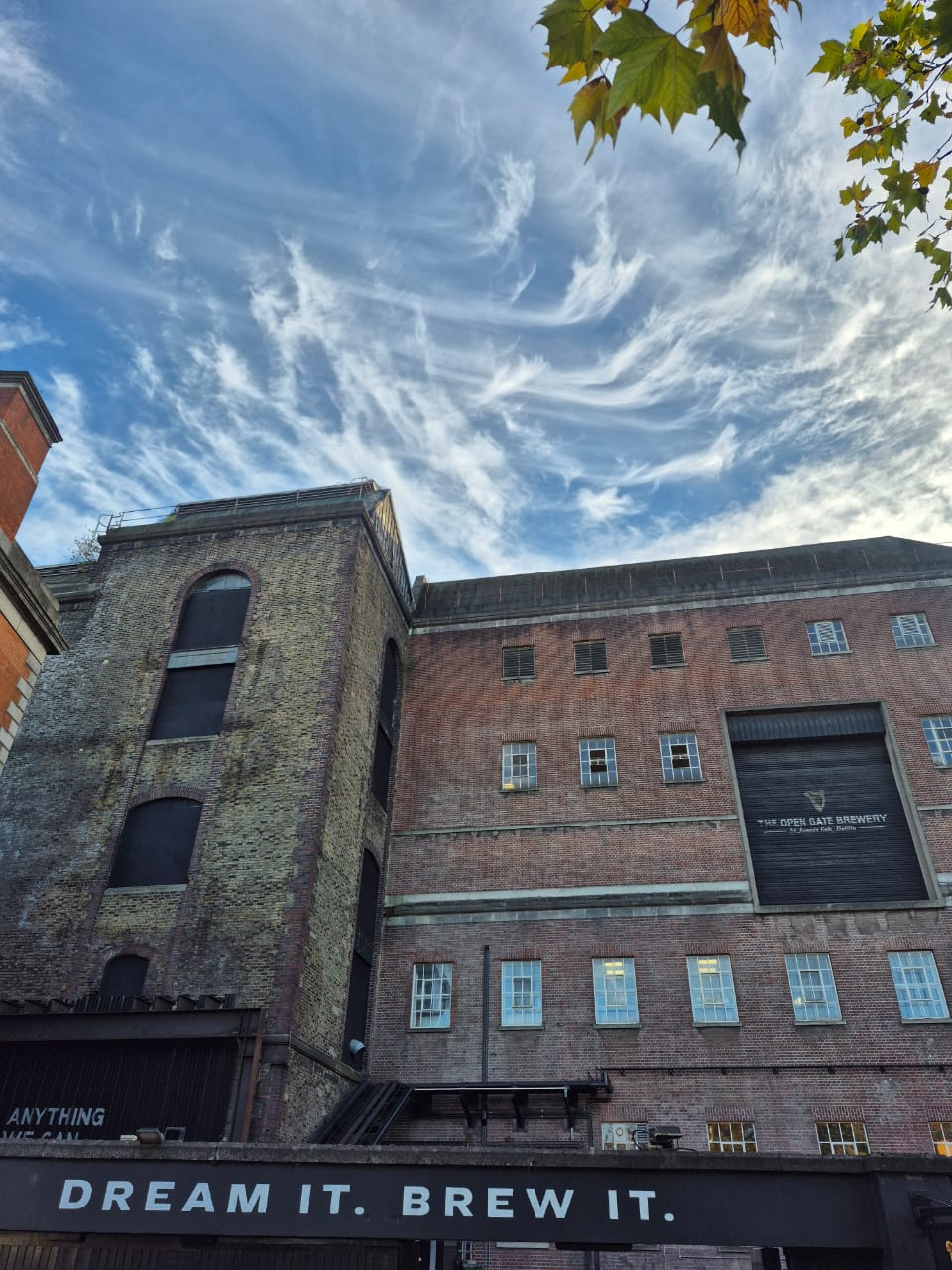
In November 2000, Guinness opened its Storehouse inside a former fermentation building at St James’s Gate, turning industrial history into a tourist attraction.
Visitors now pay from €24 to explore seven floors devoted to the family’s fortunes, brewing technology and advertising before enjoying a pint overlooking Dublin from the Gravity Bar.
There are restaurants, shops and premium experiences for those prepared to spend more, including lessons in pouring the perfect pint.
And the customers keep coming. The Storehouse welcomed 1.65m visitors in 2024, an increase of 10 per cent, while celebrating its 25 millionth visitor since opening.
Its standalone profits are not publicly disclosed in those figures, but the commercial appeal is hard to miss.
People pay to discover the history of a product they can buy in practically any Irish pub. Along the way, they may spend more on food, merchandise and additional experiences, leaving with a stronger connection to the brand.
There is something rather clever about getting customers to pay for an experience that also serves as advertising.
Diageo evidently believes the formula can travel. In December 2025, it opened a £73m Guinness Open Gate Brewery in London’s Covent Garden, combining a working microbrewery with restaurants, bars and retail facilities.
And that brings us to Limassol.
Because Cyprus has its own famous beer, its own historic brewery and an ownership story that could hardly be more different from the Guinness dynasty.
The case of Keo
Established in 1927 as a winemaking business, Keo launched its famous lager on May 17, 1951, with the help of Czech brewmasters.
The company became one of Cyprus’ best-known brands as tourism expanded, its beer appearing in tavernas, hotels and restaurants across the island.
Its shareholders, however, offer a particularly Cypriot twist.
According to KEO’s 2025 accounts, the Holy Archbishopric of Cyprus owns 40.45 per cent, while the Central Ecclesiastical Fund holds another 28.86 per cent.
Together, they control 69.31 per cent of the company.
Guinness produced aristocratic brewers and wealthy financiers. Keo has the Archbishopric of Cyprus among its controlling shareholders.
Neither company’s history could reasonably be described as dull.
Keo is also a substantial business, recording €74.45m in turnover in 2025, with first-half revenue for 2026 reaching €32.35m and net profit of €2.97m.
The company is planning a €50m distribution and spirits bottling centre in Polemidia, although delays in obtaining permits have complicated the investment.
And here comes the interesting part. According to the Limassol Chamber (Evel), Keo intends to reopen its historic Limassol brewery to visitors once suitable safety arrangements are in place.
The facility, between the city’s old and new ports, remains closed to the public, with no reopening date confirmed.
It is quite a prospect.
Guinness has turned industrial heritage into one of Ireland’s leading visitor attractions. Keo already has a working brewery, decades of local history and a recognisable brand in one of Cyprus’ busiest tourist cities.
It also produces something with a history considerably older than Guinness.
Commandaria
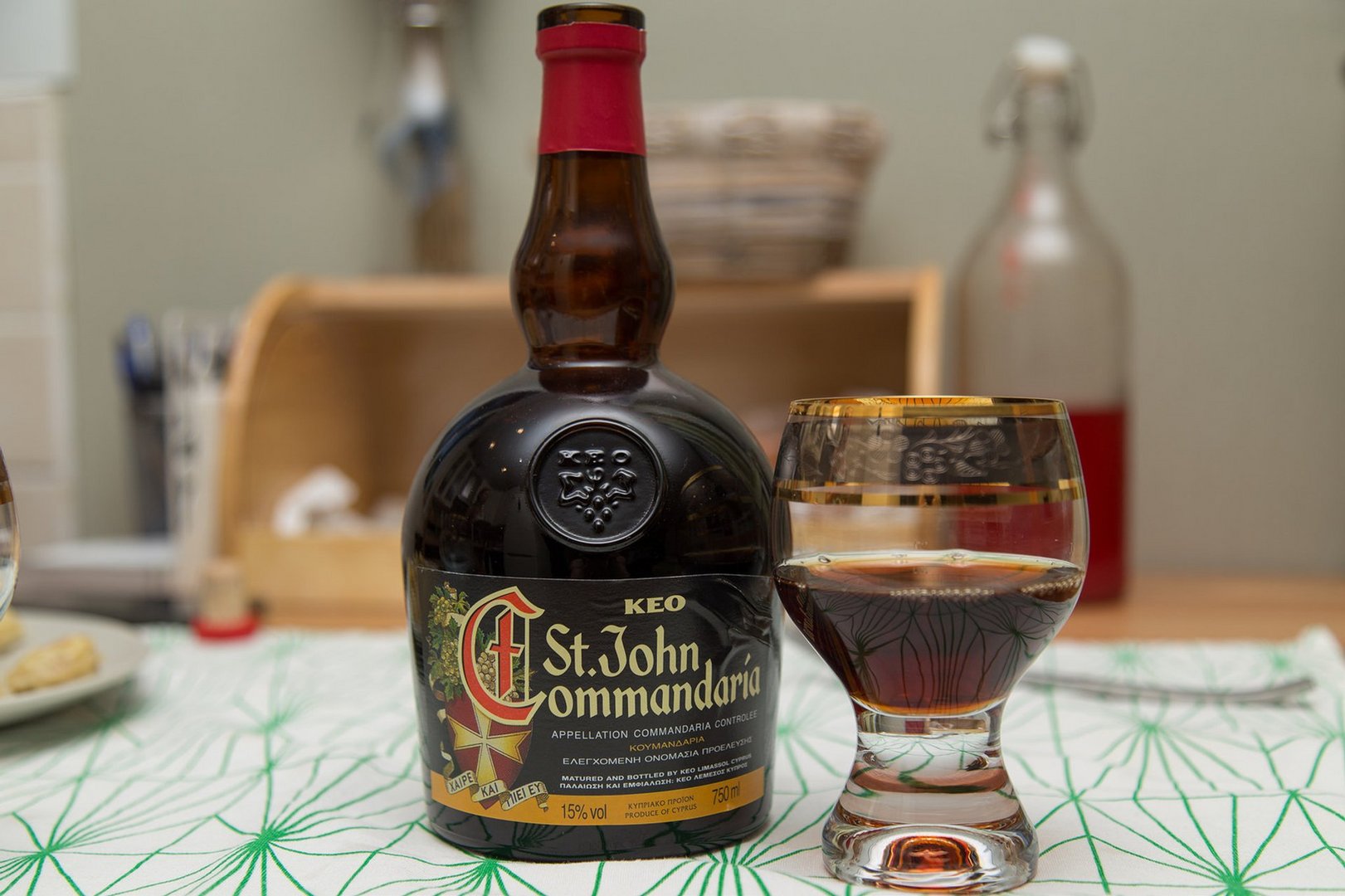
Keo’s range includes St John Commandaria, made from the indigenous Mavro and Xynisteri grape varieties.
The wine’s story stretches back to medieval Europe, when it became associated with the Knights of St John and the region around Kolossi.
In December 2025, Commandaria received further international recognition when its traditional winemaking practices were added to UNESCO’s heritage list.
The wine also enjoys European Union protected designation of origin status, while the island’s established wine route connects 14 villages with centuries of agricultural and commercial history.
There is certainly a business opportunity worth examining.
Cyprus welcomed a record 4.53m tourists in 2025, generating approximately €3.7bn in revenue.
This year, however, the picture has become less encouraging.
According to official figures, tourism revenue fell 6.2 per cent to €2.32bn during the first eight months of 2026, compared with €2.47bn a year earlier.
For a country so dependent on international visitors, encouraging them to spend more, particularly outside the summer months, is becoming increasingly important.
And Cyprus has more to offer than another day on the beach.
Brewery visits, wine tastings and experiences built around traditional products could bring additional business to producers, restaurants, guides and rural communities.
France, Italy, Spain and Portugal have long recognised the commercial value of connecting local products with tourism. Visitors do not simply buy wine. They visit the vineyards, meet the producers, discover the villages and spend money along the way.
Cyprus has similar possibilities, from Commandaria and halloumi to olive oil, carob and traditional crafts.
Of course, Keo is not Diageo, and a brewery in Limassol cannot be expected to compete with the marketing budgets of a multinational drinks group.
Nor would turning every traditional village into a tourist attraction necessarily be desirable.
But there is a difference between preserving heritage and making sensible commercial use of it. Guinness has spent generations doing both.
The family built its fortune by recognising changing demand, developing exports and investing in production. Its modern owners have continued that approach, finding new markets while giving the brewery’s history an additional commercial purpose.
For Cyprus, the opportunity is not to produce another Guinness. It is to look more closely at the economic value of its own brands, traditions and industrial buildings.
Keo already has the brewery and plans to welcome visitors again. Commandaria has centuries of history, European protection and UNESCO recognition.
And Cyprus has millions of tourists who might be persuaded to spend more if those experiences were easier to discover and enjoy.
Arthur Guinness was not thinking about tourism when he signed that 9,000-year lease in 1759.
He wanted to sell beer.
His descendants made a fortune from it. The company’s modern owners have found a way to make money from the family story too.
In Dublin, tourists pay to walk through that history before enjoying the famous pint. In Limassol, Keo has the brewery, the history and plans to reopen its doors.
Ireland has worked out how to turn brewing heritage into a substantial tourism business.
Cyprus has some rather good ingredients of its own. Perhaps it is time someone opened the doors.




Click here to change your cookie preferences