
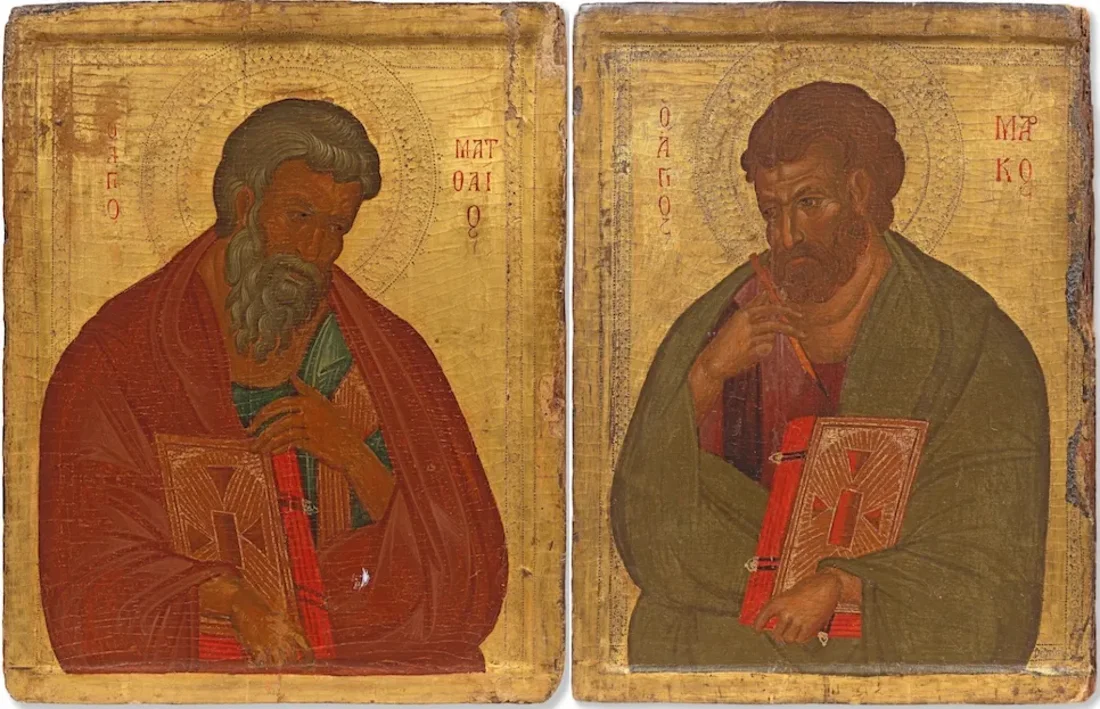
Two Byzantine icons looted after the Turkish invasion in 1974 have been officially handed to the Bishopric of Morphou, completing their return to Cyprus after more than five decades.
The icons depict the Evangelists Matthew and Mark and date from the 14th-century, during the imperial rule of the Palaiologos family.
They originally belonged to the Church of Panayia Forbiotissa in Asinou but had been transferred to the Bishopric of Kyrenia before the invasion, from whence they were stolen.
The icons were traced to the United Kingdom, where their movements were documented and the Church of Cyprus’s ownership rights recognised.
They were returned to the Bishopric of Morphou without payment, as their holder did not seek compensation.
Bishop Neophytos of Morphou described their return as the result of faith and persistence, remarking that “This is how God works, through trials both of the fatherland and personal.”
Attending the official ceremony, lawyer Giorgos Hadjimieris described the return as a reversal of the loss suffered by the Church, saying “the river this time had a reverse direction, it returned to the source”.
Byzantine scholar Christodoulos Hadjichristodoulou, art historian Maria Paphitis and Bishop Porphyrios of Neapolis were among those whose efforts helped secure their return.
The icons belong to a larger series associated with the Asinou church.
Two others, depicting the apostles Peter and Paul, were returned from New York in 2007.
An icon of Christ Pantocrator from the same series survives, while works depicting the Virgin Mary, St John the Baptist and the Evangelists John and Luke remain missing.
Panagia Forbiotissa, also known as Panagia tis Asinou, stands near Nikitari in the foothills of the Troodos mountains.
The monastery was founded in 1099, and the church was built in the early 12th century.
Its interior is covered in Byzantine wall paintings dating from the 12th to the 17th centuries.
The church is part of the UNESCO-listed painted churches of Troodos.



Click here to change your cookie preferences