
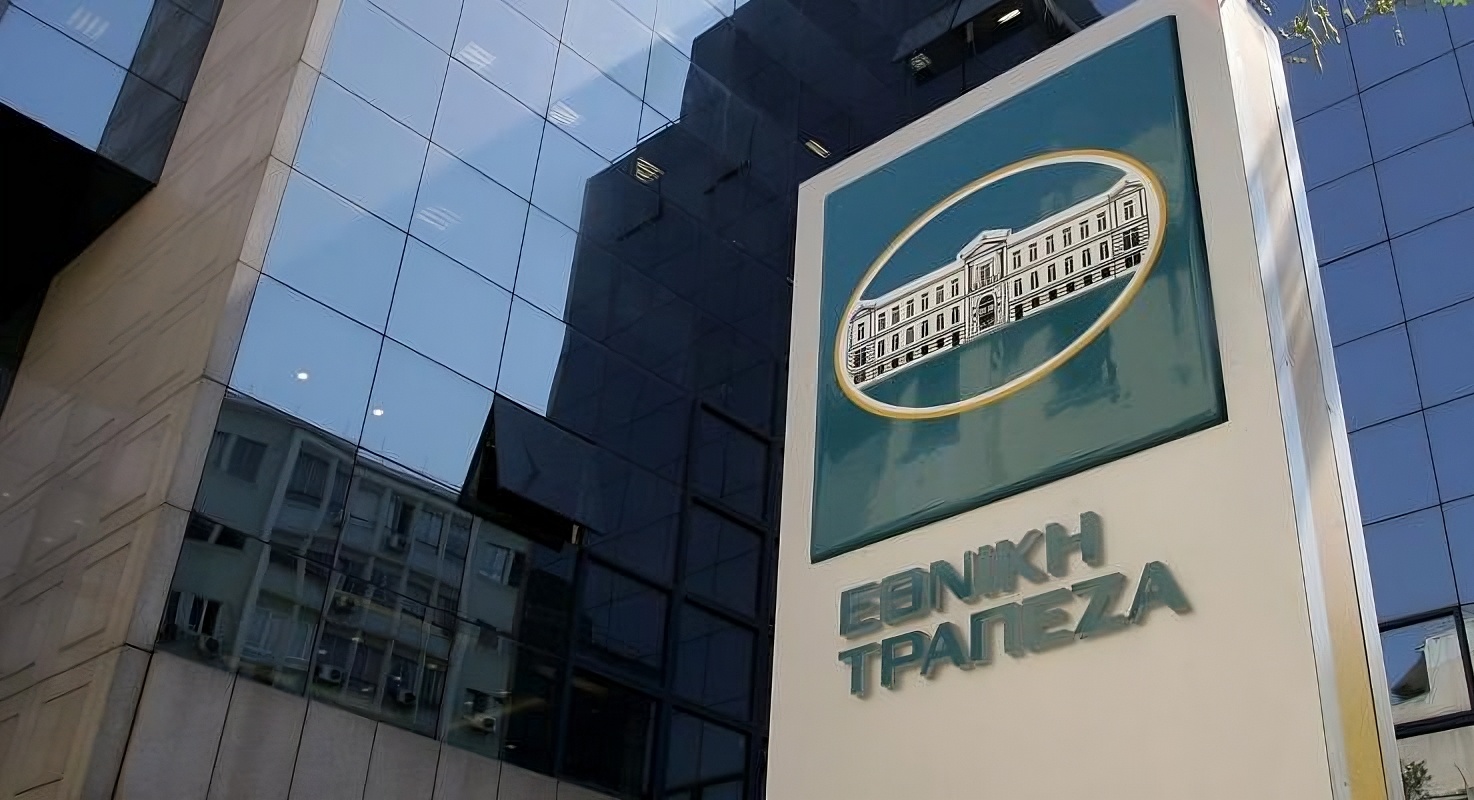
NBG reports strong results as shareholder payouts increase
National Bank of Greece (NBG), which operates in Cyprus through its local subsidiary, reported profits after tax of €996 million for the first nine months of 2026, supported by stronger lending income, rising fees and resilient economic activity, as the Greek banking group continued investing in technology and expanding its digital services.
The bank’s performance translated into a 15.7 per cent return on tangible equity (RoTE), exceeding its full-year target of more than 15 per cent, while earnings per share reached €1.48, already above its 2026 guidance of more than €1.40.
Chief executive officer Pavlos Mylonas said the Greek economy had continued to demonstrate resilience despite persistent geopolitical uncertainty, maintaining stronger growth than the euro area.
“Economic activity remains supported by sustained investment momentum, resilient domestic demand and a solid tourism season,” Mylonas said.
He also pointed to sound public finances, stronger private sector balance sheets and favourable financing conditions, including record foreign direct investment inflows and increased capital market fundraising, as factors supporting continued economic growth.
In this context, NBG delivered another strong nine-month performance, with Mylonas attributing the results to the strength of its business model and the execution of its strategic priorities.
“Profit after tax reached €1.0 billion, translating into a RoTE of 15.7 per cent,” he said.
The chief executive attributed the performance to accelerating net interest income and double-digit growth in fees, while asset quality remained resilient despite external uncertainties.
“This strong set of results reinforces our confidence in exceeding our upgraded FY26 guidance on high-impact KPIs, including NII, cost-to-income, EPS and RoTE,” Mylonas said, adding that positive underlying income trends were expected to continue into 2027.
Net interest income (NII) increased by 5 per cent year-on-year during the first nine months, with growth accelerating considerably in the third quarter.
Quarterly NII rose by 6 per cent compared with the second quarter, benefiting from higher benchmark interest rates, with three-month Euribor increasing by 28 basis points, as well as the contribution from lending growth.
The bank’s net interest margin also widened by 15 basis points quarter-on-quarter to 288 basis points in the third quarter, reflecting the delayed repricing of assets.
NBG said the favourable interest rate outlook, further repricing and a substantial pipeline of approved but not yet disbursed corporate loans provided grounds for expecting continued income growth during the final quarter.
The bank’s nine-month performance was already consistent with its full-year guidance for mid-single-digit NII growth, with management identifying further upside potential.
Mylonas said the bank’s balance sheet remained a significant competitive advantage, combining strong capital buffers, ample liquidity and a stable, low-cost deposit base.
“Robust capital generation comfortably accommodates performing loan expansion expected at over €3bn for 2026 and sector-leading shareholder distributions, while preserving significant strategic flexibility,” he said.
He added that the bank would continue to prioritise profitable organic growth and selectively pursue opportunities that could strengthen its product offering and diversify revenue streams.
Lending and deposits
NBG’s lending activity remained strong, with loan disbursements reaching almost €8bn in the first nine months, an increase of 28 per cent year-on-year.
Performing loan balances expanded by €2.2bn since the beginning of the year, driven mainly by large corporate and structured finance lending in the energy, infrastructure and shipping sectors.
Although third-quarter lending was affected by seasonal factors and early repayments by corporate customers, the bank expects activity to accelerate during the final three months of 2026.
It said a substantial pipeline of approved corporate loans awaiting disbursement should support full-year performing loan growth of more than €3bn, in line with its guidance.
Deposits increased by 7 per cent year-on-year, with core deposits rising by €3.9bn, or 9 per cent, primarily driven by low-cost transactional accounts held by households.
Time deposits also recorded a slight annual increase, despite continued competition from investment products and the movement of some customer funds into mutual funds.
NBG said it continued gaining market share in mutual funds during the third quarter, achieving an increase of approximately 100 basis points since the beginning of the year.
Assets under management across its mutual funds increased by almost €2bn over the same period, supporting the generation of recurring fee income.
The bank’s funding cost remained below 70 basis points, the lowest level among Greek banks, reflecting what it described as its strong liquidity position.
Fees, costs and asset quality
Fee and commission income increased by 10 per cent year-on-year during the first nine months, outperforming the bank’s full-year guidance for high-single-digit growth.
Third-quarter fee income remained close to the level recorded in the second quarter, despite a more demanding comparison following the completion of certain Recovery and Resilience Facility programme pre-approvals and particularly strong capital markets activity earlier in the year.
Retail fees continued to benefit from demand for investment products, with NBG mutual funds recording growth of more than 40 per cent year-on-year.
The bank said cross-selling investment products to its extensive depositor base remained an important source of income, while asset management and bancassurance offered further opportunities for diversification.
It also highlighted its strategic partnership with Allianz Greece as part of efforts to expand its insurance-related services.
Operating expenses increased by 8 per cent during the nine-month period, remaining in line with full-year guidance.
The increase reflected personnel costs, including the effects of collective and bank-level agreements, as well as spending on attracting, developing and retaining employees with the skills required to support its strategy.
General and administrative expenses were driven partly by initiatives to improve customer experience and service quality, including investment in its contact centre.
Depreciation costs also reflected continued investment in digital capabilities and technology infrastructure.
Despite this spending, NBG maintained a cost-to-income ratio of 34.4 per cent, among the lowest in Europe, which it said demonstrated the efficiency of its operating model.
Loan impairment charges amounted to €117m during the first nine months, equivalent to a cost of risk of 38 basis points, compared with 41 basis points in the corresponding period of 2025.
The figure remained within the bank’s full-year guidance of below 40 basis points, reflecting relatively favourable asset quality conditions.
Non-performing exposures represented just 2.4 per cent of total exposures, while NBG said its provision coverage ratios remained the highest among European banks across different stages of credit risk assessment.
Capital strength and shareholder returns
NBG reported a common equity tier one (CET1) capital ratio of 17.5 per cent and a total capital ratio of 21.2 per cent, following continued capital generation during the third quarter.
The CET1 figure already incorporates accrued shareholder distributions, with the bank highlighting that its planned payouts represent the highest shareholder distribution among Greek banks.
Its minimum requirement for own funds and eligible liabilities (MREL) stood at 28.7 per cent, above the regulatory requirement of 26.9 per cent for 2026.
The bank also confirmed an interim dividend of €230m, equivalent to approximately €0.26 per share, representing an 18 per cent increase compared with 2025.
Mylonas said the distribution underlined the bank’s commitment to improving returns for shareholders.
“Our approach to capital allocation remains disciplined and selective,” he said, explaining that the bank intended to prioritise profitable organic growth while retaining the flexibility to pursue opportunities that could create additional value.
The chief executive added that strong capital generation allowed NBG to support lending expansion and shareholder distributions without compromising its financial resilience.
Technology and digital transformation
Technology investment remained a central part of NBG’s strategy, with the bank describing its transformation programme as an important competitive advantage.
Mylonas said its investments in technology and human capital had established a differentiated operating platform, supporting greater adaptability, scalability and long-term profitability.
The bank has completed the rollout of its new cloud-based core banking system, which it described as among the most advanced in Europe.
Building on that infrastructure, it has introduced a unified loan origination platform covering corporate and consumer lending, as well as credit cards, with mortgage lending currently being integrated.
NBG is also accelerating its adoption of artificial intelligence (AI) across its operations, including through its Sofia chatbot on digital banking channels.
A voice-based AI agent was introduced at the bank’s contact centre in July 2026, with NBG aiming for the technology to handle more than 50 per cent of contact centre traffic within six months.
The bank said it was also applying AI across its wider operations to improve productivity and customer experience.
Its digital banking services now have 4.7m registered users and 3.3m active users, supported by its next-generation retail mobile banking application and business internet banking platform.
The bank has also expanded its Next application for younger customers, which has 35,600 active users.
In its corporate and retail operations, NBG said it was pursuing income growth in both Greek and international markets through an improved service model and the expansion of its bancassurance offering in partnership with Allianz Greece.
Mylonas said the completion of the core banking system rollout, alongside the expanding use of AI, strengthened the bank’s ability to innovate and capture new growth opportunities.
He added that its investments would help improve customer experience while supporting operational efficiency, commercial effectiveness and cybersecurity.
ESG performance and social initiatives
NBG also highlighted progress in its environmental, social and governance strategy, with MSCI awarding it an AAA rating, its highest possible assessment.
The bank was categorised as a leader among 641 banks assessed by the international ratings provider.
On environmental matters, NBG said it continued supporting the transition of the Greek economy towards cleaner energy.
Corporate financing for renewable energy sources reached €2.6bn, while contracts under the green pillar of Greece’s Recovery and Resilience Facility programme totalled €1.8bn by the programme’s conclusion.
Retail lending for solar installations, electric and hybrid vehicles, energy-efficient properties and building renovations exceeded €500m.
On social responsibility, the bank is working with 12 leading Greek foundations to establish a Dementia Centre of Excellence in Greece.
It also highlighted its involvement in the renovation of 670 schools to date through the Marietta Giannakou programme.
Further initiatives include the launch of the Academia 2030 programme, in cooperation with other systemic banks, and the donation of three school buildings to the Municipality of Ioannina.
NBG said its corporate governance framework remained deeply embedded in its culture and operating model, supporting internal controls and greater transparency.
Mylonas further stated that the bank’s competitive position, combined with Greece’s favourable long-term growth prospects, supported its confidence in meeting or exceeding its strategic targets.
He concluded by saying that the objective remained to deliver sustainable returns while creating long-term value for shareholders, customers and employees.




Click here to change your cookie preferences