
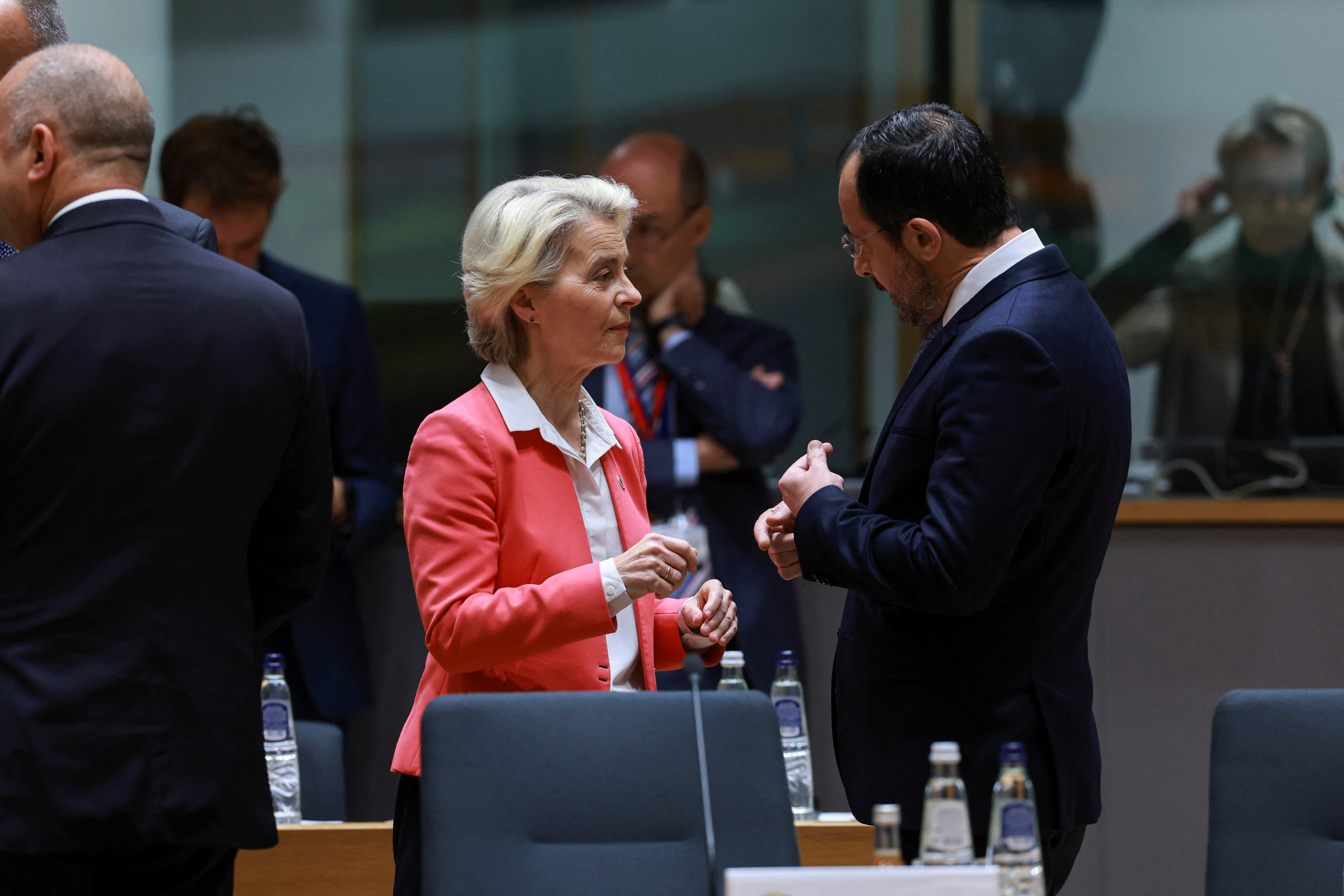
Turkey is “the leading country when it comes to the violation of sanctions against Russia”, President Nikos Christodoulides said on Thursday, before calling on the European Union to take “the next step” to address the matter.
“As the European Union, we must not merely acknowledge this fact, we must move on to the next stage, the next step, in addressing this specific challenge,” he said.
On this front, he appeared to reference a report written by EU sanctions envoy David O’Sullivan, which was, according to Ukrainian newspaper the Kyiv Independent, circulated to EU countries on Tuesday, which he said corroborated his position.
The Cyprus Mail has reached out to the European Commission to inquire about the report’s publishing and its contents.
Christodoulides on Thursday also said on the matter that “the Republic of Cyprus, as a member state, understands the situation, the reality of the illegal Russian invasion, better than any other”, and promised to “support the effort”, including by way of contributing a share of a planned €45 billion worth of loans to the country next year.
The Ukrainian newspaper had reported earlier on Thursday that the United States’ military involvements in both Iran and Venezuela “reversed a downward trend in Russia’s ability to generate revenue from oil exports”, as more countries sought to import cheaper, and more readily available Russian oil.
Russia generated $102bn in crude oil revenue between January and September
It said that Russia generated a total of $102 billion in crude oil export revenue between January and September – a figure which exceeds the total amount it recorded throughout the duration of last year.
This, it said, came about following US attacks in the Middle East which led to sporadic closures of both the Strait of Hormuz and the Bab al Mandab strait – two critical maritime chokepoints in the Middle East.
However, it did note that the EU’s existing sanctions have “played a key role in limiting the ability of Russia to benefit from the increase in oil prices due to the Middle East crisis”.
The EU has banned a wide range of Russian products from being imported into the bloc, including crude oil and refined petroleum products, liquefied natural gas, coal, many metals, cement, wood, asphalt, and diamonds.
It also maintains an oil price cap, meaning that it allows Russian oil to be transported to third countries through European oil provided that it is being sold for a maximum of $47.60 per barrel of crude oil.
This figure is currently a little over half the global trading price for crude oil, which as of Thursday afternoon is around $85, meaning that Russia can effectively only transport oil through European waters if it is sold at well below the going rate.


Click here to change your cookie preferences