
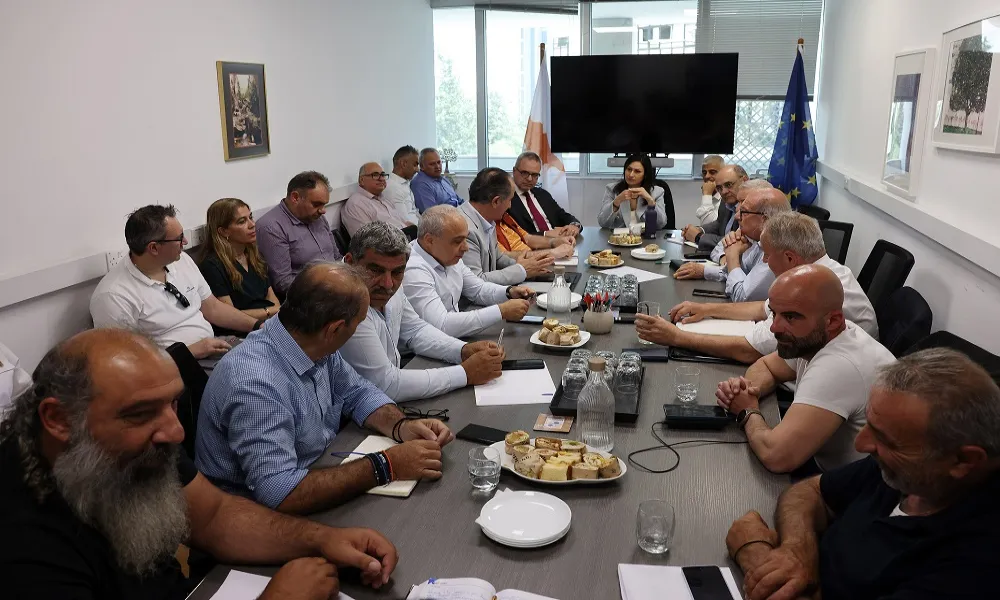
Tensions between livestock farmers and the agriculture ministry continued on Tuesday following a discussion on compensation measures linked to the foot-and-mouth disease outbreak.
The meeting, held at the ministry with agricultural organisations and the newly formed farmers’ group, “voice of the livestock breeders”, failed to produce full agreement, particularly on compensation terms and procedural issues.
“Today, we saw that we all agreed among ourselves, but in the end, from what I understand, we did not agree on anything,” said the association’s president, Neophytos Neophytou.
He said the compensation package, due to be submitted to cabinet for approval, had effectively already been agreed by advisory structures within the ministry.
“We believe that, without having officially read, reviewed, discussed the results that they themselves have written on paper, we cannot agree,” he stressed.
The dispute centres on payments for culled animals, with figures reportedly ranging from €47 to €420 depending on category and documentation requirements.
Neophytou said farmers had not been fully briefed on the criteria.
“We do not know exactly, and we cannot agree on anything. It is possible that that they are the best that could be done. However, since we do not know them, we cannot agree,” he said.
Agricultural organisations, however, expressed satisfaction with the proposed framework, saying it reflects prior consultations with the ministry.
Farming union Pek’s president, Michalis Lytras, said the meeting was largely informational.
“We will see the results tomorrow, when they are approved by the cabinet,” he said, adding that discussions would then continue on restarting production activity.
Lytras also raised concerns over disease management in areas outside government control, warning that “if appropriate measures are not taken in the occupied areas, the virus will persist.”
He said agricultural organisations are urging greater involvement from the EU in monitoring funding and disease control mechanisms.
“What we demanded is that the European Union should be more actively involved in this issue,” he said.
The “voice of the livestock breeders”, however, rejected parts of the discussion framework, arguing that they were not adequately represented in decision making.
“These agricultural organisations represent farmers who are not in livestock farming,” Neophytou said.
“There should have been people who were suitable so that decisions could be made that were logical and aimed at restarting livestock farming.”
The association’s vice president Christodoulos Christodoulou said attention should focus on domestic containment measures rather than external factors.
He added that disagreement over compensation and policy direction had created mistrust. “Wherever parties get involved, we have a problem,” he remarked.
The group confirmed it will meet in Choirokitia to assess its position, with possible future protests discussed if concerns remain unresolved.
Neophytou said any action would depend on whether meaningful responses are received from the government.




Click here to change your cookie preferences