
Seasonally adjusted production in construction fell by 1.3 per cent in the euro area and 1.0 per cent across the EU in June compared with May, according to Eurostat’s first estimate.
The figures marked a reversal from May, when construction production had increased by 0.2 per cent in the euro area and 0.1 per cent in the EU.
On an annual basis, production was 0.7 per cent lower in the euro area in June than a year earlier, while the EU recorded a marginal 0.2 per cent increase.
The monthly decline was broad-based, with euro area production falling by 0.9 per cent in building construction, 1.4 per cent in civil engineering and 1.8 per cent in specialised construction activities.
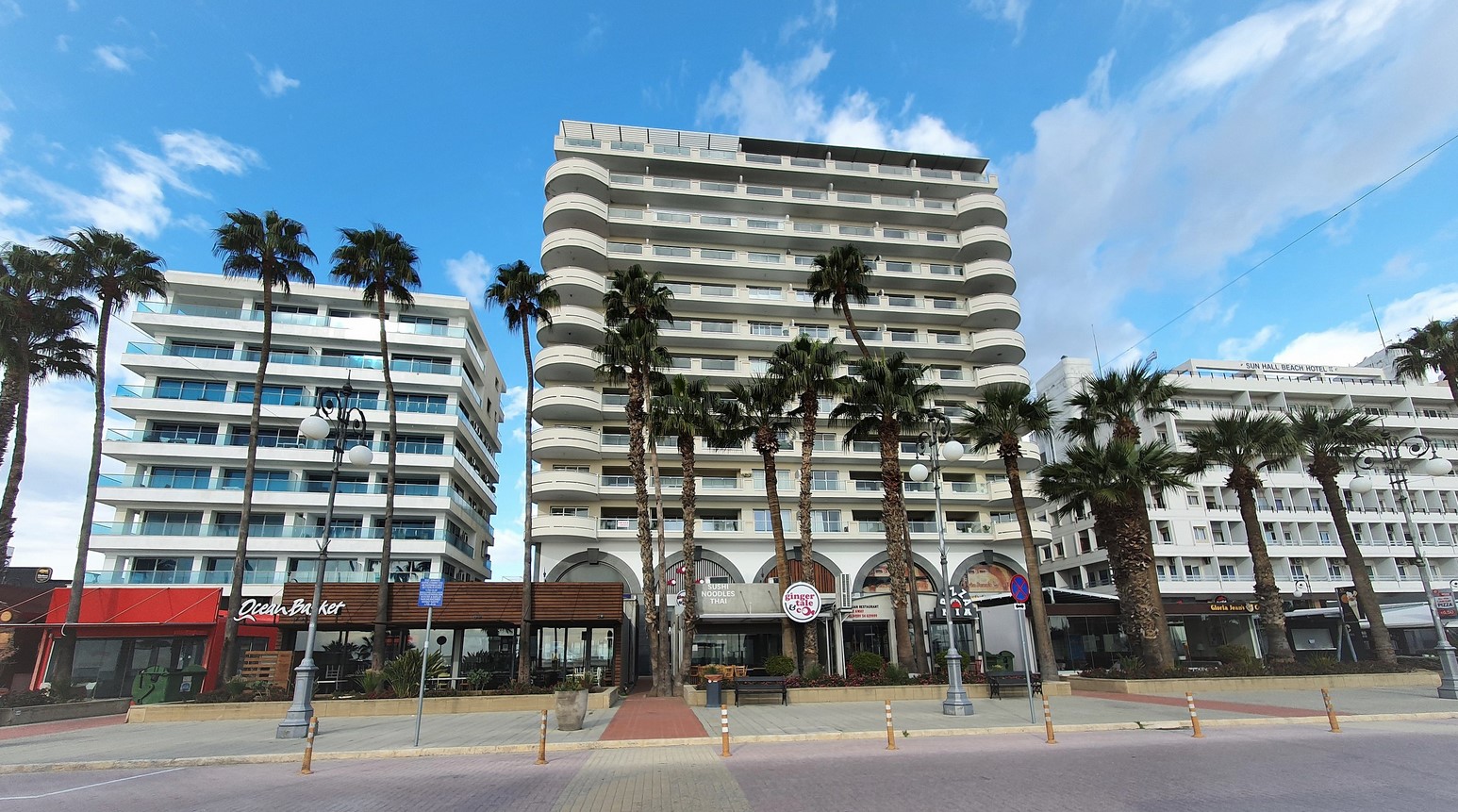
The Cypriot town placed ahead of several established Mediterranean destinations in the 2026 Shoulder Season Index, compiled by UK travel insurance comparison company Quotezone.
Larnaca was ranked behind Antalya in Turkey and Tenerife in the Canary Islands, while Greece’s Crete and Malta completed the top five.
The ranking comes as almost half of travellers appear increasingly willing to move their main holidays away from the peak summer months, amid concerns about extreme heat and rising holiday costs.
According to an announcement released on Thursday, the meeting focused on the importance of these areas in strengthening the competitiveness of Cypriot businesses as technological developments accelerate.
The two sides also exchanged views on opportunities to further strengthen cooperation between the Office of the Commissioner of Communications and Keve, while exploring specific areas of common interest.
Pieri thanked Roussounides for the visit and the constructive discussion, stressing the importance of maintaining regular communication and cooperation with the business community.
He placed particular emphasis on the need for continued engagement with businesses at a time of rapid technological change.
“The first impressions are that this is a serious effort, within the framework of the country’s economic capabilities, at first glance,” he told the Cyprus News Agency, before adding that “a comprehensive approach is being taken, but we need to look carefully at the details”.
Asked about the discussion held on Wednesday when the government first presented its plans to employers’ organisations and trade unions, he said that it was “the first time it was so productive since this effort began, since the issues were now concrete, with numbers, scenarios and understandable examples”.
On the matter of the €50m per year expense for the taxpayer, he said that it will be examined “with the help of our advisors”.
Recently-published ECB survey findings show that 92 per cent of euro area businesses with physical points of sale accept cash, making it the bloc’s most widely accepted payment method, even as the acceptance of mobile payments has almost doubled in two years.
Mobile payment acceptance rose from 36 per cent of businesses in 2024 to 68 per cent in 2026, while card acceptance remained broadly stable at 88 per cent.
The figures point to a payments market in which digital methods are expanding rapidly without displacing cash to the extent that might have been expected following the pandemic.
Cash acceptance actually recovered slightly, rising from 90 per cent in 2024 to 92 per cent in 2026 after declining during and immediately after the pandemic.
The association said the revamped platform was intended to provide a broader and more accessible digital presence for information and analysis concerning Cyprus and its banking sector.
The new website hosts the association’s full collection of articles in English, alongside official reports, economic studies and analysis on the course of the Cypriot economy.
It also includes references to and articles from international English-language media, giving users access to a wider range of material on developments affecting Cyprus and the financial sector.
The association said the revamped platform formed part of a broader effort to strengthen its outward-facing activities and communication.
The public transaction was formally disclosed to the market on Thursday, in accordance with the regulatory frameworks of both the Cyprus Stock Exchange (CSE) and the Cyprus Securities and Exchange Commission (CySEC).
The acquisition was carried out on behalf of the company by the Cyprus Investment and Securities Corporation Ltd (CISCO).
The company added that corporate authority for the transaction stems from a formal mandate granted during the firm’s annual general meeting held on June 30, 2026.
The total volume of shares was accumulated across six distinct market orders executed during a single trading session.
The company formally notified shareholders and the wider market of the expected drop in earnings in line with the regulations of the Cyprus Stock Exchange (CSE) and the Cyprus Securities and Exchange Commission (CySEC).
The projected downturn in profitability is principally driven by lower returns generated from the firm’s investment portfolio.
However, operating profits are anticipated to show an increase over the six-month period, helping to partially offset the investment losses.
Officials from the civil servants’ union branch (Oekdy-Sek), the democratic labour federation (Deok) and the construction workers branch of the worker’s federation (Pasyek-Peo), which together represent around 7,500 hourly paid government employees, said no developments had taken place since August 5, when the strike decision was formally announced.
George Constantinou, speaking on behalf of Oekdy-Sek, said the unions were waiting for the government to respond to calls for continued negotiation aimed at securing general wage increases for hourly paid staff.
“Our goal is not to strike or cause suffering to the public or workers,” he insisted. “Our goal is to reach an agreement that improves wages, which are very low.”
According to a Keve post on social media, the meeting examined ways to broaden bilateral business cooperation and establish new commercial partnerships between the two countries.
Particular emphasis was placed on sectors seen as offering significant potential for cooperation, including construction and infrastructure, renewable energy, and the development and modernisation of ports and airports.
The visit also included a series of b2b meetings organised by Keve between the Libyan delegation and Cypriot companies, focusing on potential projects, investment opportunities and other areas of mutual interest.
“The strong interest and participation shown by Cypriot companies underlined the potential for closer economic ties between Cyprus and Libya, as well as the readiness of the Cypriot business community to contribute its expertise and capabilities to Libya’s ongoing development,” the chamber said.
Instead, he told the Cyprus News Agency, “we must create realistic expectations of what the return of such a fund can be, given that it must be low-risk”.
Then asked whether the government’s plans to terminate state borrowing from the social insurance fund, he said that “the termination of borrowing and the repayment of the amount already borrowed should be done gradually”, so as to ward off the risk of a financial crisis.
“For example, as a first step, there could be no additional borrowing. In practice, this would mean that the state, instead of having the two- or three-per-cent surpluses foreseen in the coming years, would have balanced books,” he said.
The International Trade & Investment Forum (ITIF) 2026 will take place in Yerevan from October 7 to 9, 2026, and is being organised by the Investment Council of Armenia under the auspices of the European Bank for Reconstruction and Development (EBRD).
The forum is expected to bring together international importers, distributors, buyers and investors with Armenian companies, with food and beverage production identified as the main sector of focus this year.
Keve said the event was intended to strengthen international trade and investment cooperation by creating opportunities for international businesses to engage directly with Armenian companies.
The repurchases were executed following decisions made during the bank’s annual general meeting of shareholders on April 30, 2026, as well as a subsequent announcement on June 12, 2026 regarding the launch of the first tranche of the share buyback programme.
Regulatory approval for the initiative was granted by the European Central Bank’s (ECB) Single Supervisory Mechanism on June 8, 2026.
The latest transactions follow a series of earlier buyback disclosures issued by the lender on June 22, 2026, July 1, 2026, July 8, 2026, July 15, 2026, July 24, 2026, August 3, 2026, and August 10, 2026.
Following these recent market operations, the financial institution now directly holds a total of 24,601,002 treasury shares.





Click here to change your cookie preferences