
International Chamber of Shipping (ICS) secretary-general Thomas Kazakos has called for closer cooperation between governments, ports and energy producers to make cleaner marine fuels more widely available and affordable, warning that shipping’s energy transition cannot be delivered by shipowners alone.
Speaking during the COP31 climate conference in Antalya, Turkiye, Kazakos set out the case for a proposed global framework linking shipping with national energy planning, helping countries coordinate investment in renewable fuels, port infrastructure and low-carbon technologies.
The proposal, known as the Global Blueprint for Clean Energy Marine Hubs, aims to connect the development of cleaner energy with the practical requirements of ships, ports and international trade routes.
According to the ICS, Kazakos argued that the framework could provide a basis for cooperation even between countries with differing energy priorities, allowing governments and businesses to identify common needs and develop projects around them.
His intervention came as shipping companies face growing pressure to reduce emissions, with the availability, price and distribution of alternative fuels remaining major concerns for the industry.
The discussions also come before another round of negotiations at the International Maritime Organisation (IMO) in London, where governments remain divided over the proposed global framework for cutting greenhouse gas emissions from ships.
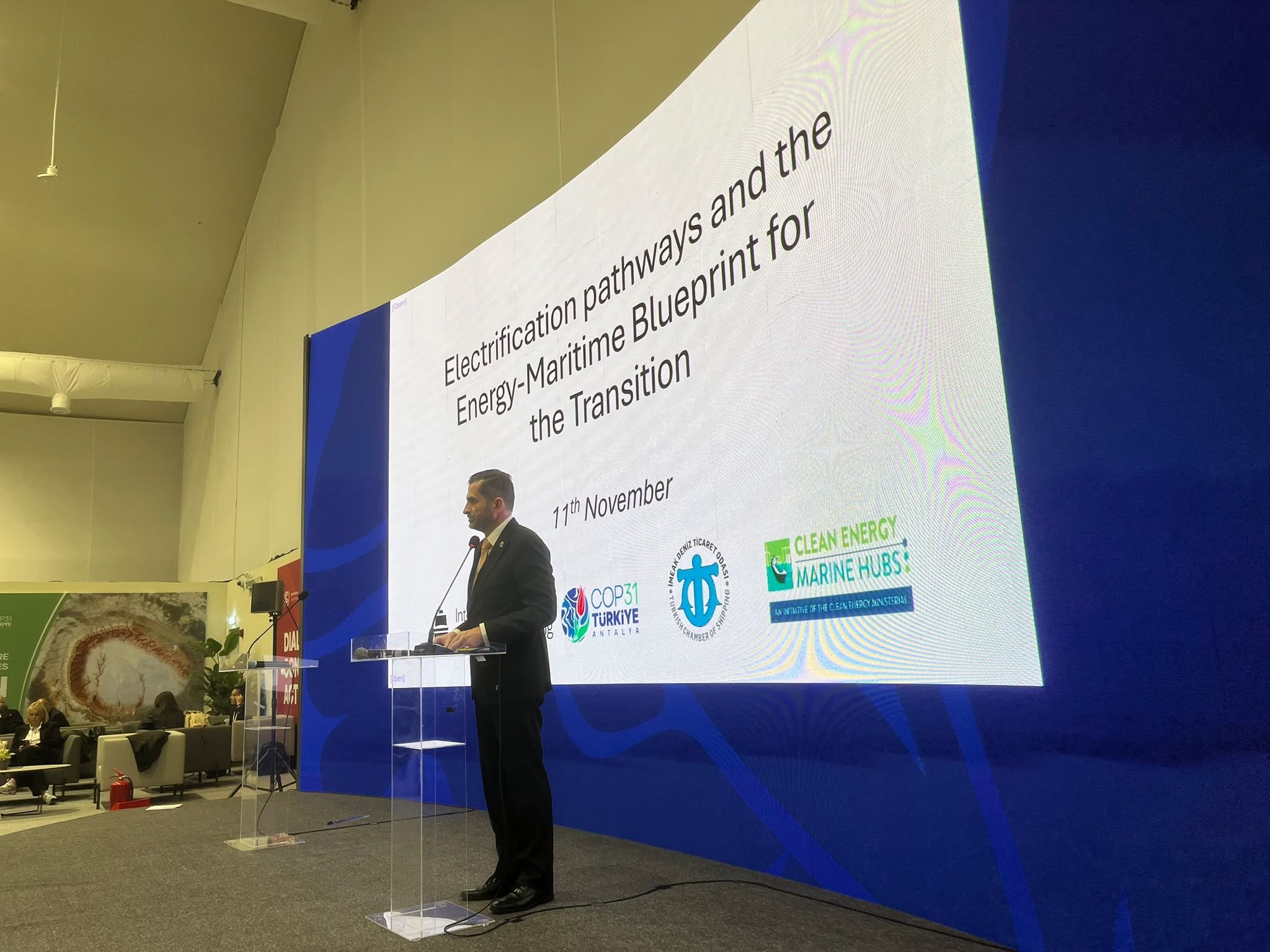
At COP31, Kazakos and ICS head of energy transition Nelson Mojarro participated in a joint event with the Turkish Chamber of Shipping on November 11, examining how electrification could work alongside other low-carbon technologies.
The session, entitled Electrification Pathways and the Energy–Maritime Blueprint for the Transition, examined the different energy requirements of vessels, shipping routes and port operations.
Rather than relying on a single technology, the discussion focused on combining shore power, vessel charging, electricity grids, energy storage and cleaner marine fuels according to the requirements of different types of shipping.
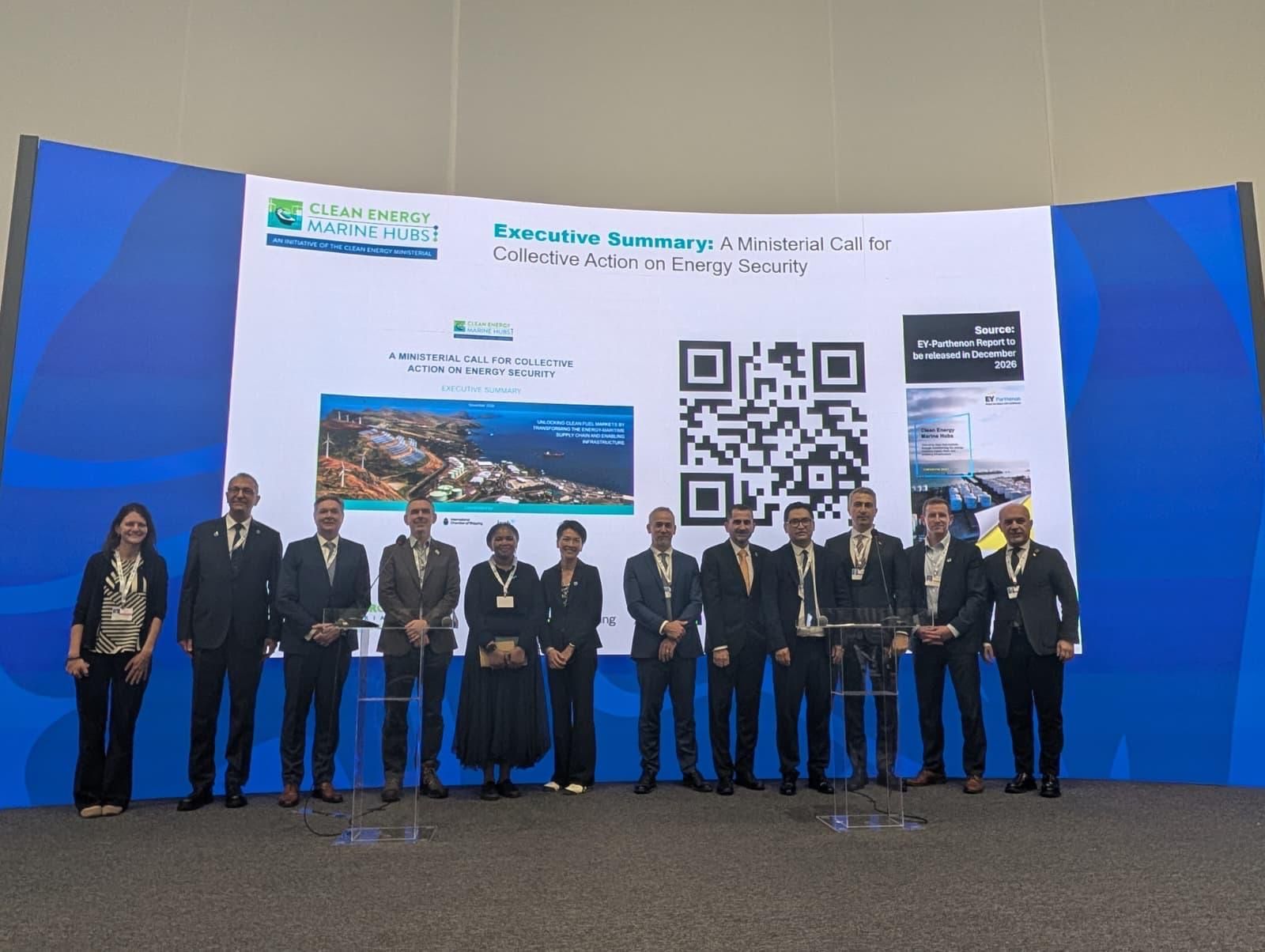
The Clean Energy Ministerial programme also examined the infrastructure and investment needed to put these technologies into use between 2027 and 2030.
For Kazakos, the proposed blueprint offers a way to bring shipping into decisions about national energy infrastructure, rather than treating marine fuel supply as a separate issue.
That could allow governments to identify where demand for cleaner fuels is likely to emerge, while giving producers, ports and shipowners greater certainty when considering long-term investments.
The commercial difficulty is familiar to the industry. Shipowners need confidence that new fuels will be available before investing in vessels designed to use them, while energy producers need sufficient demand before committing to expensive production and distribution facilities.
The Clean Energy Marine Hubs (CEM-Hubs) initiative, developed through cooperation between the ICS and the International Association of Ports and Harbors (IAPH), is intended to help address that problem.
Its global blueprint provides guidance on demand, infrastructure, investment and governance, bringing together businesses and governments across the energy and maritime industries.
Meanwhile, Kazakos said a Ministerial Energy Security Action Plan, expected to launch in January, would provide a starting point for coordinating international, regional and national efforts.
The objective, according to the ICS, is to develop markets for cleaner fuels, attract investment and expand the CEM-Hubs initiative according to the needs of individual countries.
The organisation also participated in discussions on November 10 with IMO secretary-general Arsenio Dominguez and Sanda Ojiambo, assistant secretary-general of the United Nations and chief executive of the UN Global Compact.
These included the Ministerial Freight Corridors Roundtable, where attention turned to connecting demand from ports and shipping companies with producers of low-carbon fuels.
For the industry, this is increasingly a question of where the energy will come from, how it will reach ships and whether the necessary infrastructure can be developed at a commercially viable cost.
The challenge extends well beyond providing electricity to vessels while they are in port.
A new Maritime Electrification Breakthrough Goal, launched during COP31, calls for electricity to account for at least 20 per cent of international shipping’s final energy demand by 2035.
The initiative, supported by a coalition of maritime stakeholders, includes electricity used directly by vessels and power supplied to ships at berth. It does not count electricity consumed by port operations or used to produce renewable marine fuels.
The target is separate from the wider COP31 ambition to increase electricity’s share of global final energy consumption to 35 per cent by 2035.
However, electrification is not expected to provide the same solution for every vessel.
Short-sea shipping, ferries and some port operations offer opportunities for batteries and shore-based electricity, while long-distance shipping will also require low- and zero-carbon fuels capable of meeting considerably greater energy demands.
One example presented during COP31 was the AET Innovator, a lightering support vessel being converted to plug-in hybrid-electric propulsion through cooperation between shipowner AET and battery technology company Fleetzero.
According to a CEM-Hubs announcement, AET estimates that the project could reduce greenhouse gas emissions by approximately 82 per cent on a tank-to-wake basis compared with a conventional vessel.
That would represent an estimated 1,220 tonnes of greenhouse gases avoided annually, although the reductions remain projections rather than measured operational results.
The vessel is expected to enter commercial service in the United States in December.
Mojarro said the work demonstrated the importance of bringing the different parts of the energy supply chain together, explaining that the initiative was focused on connecting governments and businesses so promising technologies could be tested and introduced commercially.
The ICS also held discussions with Italy’s environment and energy ministry, including director-general Alessandro Guerri and CEM Biofuture Platform representative David Chiaramonti.
According to reports of the meeting, discussions covered sustainable biofuels, hydrogen and green ammonia, alongside the infrastructure needed to make alternative energy sources available to international shipping.
The Belem 4X Pledge, an international initiative seeking to quadruple sustainable fuel production and use by 2035, was another area of discussion.
Kazakos and other ICS representatives also engaged with Turkish Deputy Transport Minister Durmus Unuvar, International Renewable Energy Agency (IRENA) director-general Francesco La Camera and MISC Group president and chief executive Datuk Zahid.
The cooperation with the Turkish Chamber of Shipping continued beyond the joint COP31 event, with discussions covering maritime developments and opportunities for closer industry cooperation.
However, the debate over fuel supply and infrastructure is taking place alongside unresolved negotiations over the rules that will govern shipping’s emissions.
On November 18, the ICS joined eight other international shipping organisations in calling for a single global regulatory framework under the IMO.
In their joint statement, the organisations warned that overlapping national and regional measures could leave shipowners facing duplicate compliance requirements and multiple charges for the same emissions.
They also argued that future regulations must reflect the cost and availability of alternative fuels, while providing incentives for investment in cleaner technologies.
As previously reported, Kazakos made a similar case during Hong Kong Maritime Week, calling for global rules that would provide greater certainty for shipping companies planning their transition.
The IMO’s Marine Environment Protection Committee (MEPC 85) is scheduled to meet in London from November 30 to December 3, following technical discussions this week. A further extraordinary session concerning the proposed Net-Zero Framework may take place on December 4.
The issue will also feature at the Cyprus Shipping Chamber’s (CSC) Global Shipping Minds Summit in Limassol on November 27, which Kazakos is scheduled to chair.
The summit will examine energy security, the transition to alternative marine fuels and the commercial implications for shipowners.
For Kazakos, the discussions at COP31 point to a broader challenge for international shipping. Governments may agree on emissions targets, and shipowners may invest in cleaner vessels, but those investments will depend on whether energy producers and ports can provide the fuels and infrastructure needed to operate them.
The next step is turning those plans into projects that work commercially, with affordable energy, reliable infrastructure and clear international rules determining how quickly the industry can move.





Click here to change your cookie preferences