
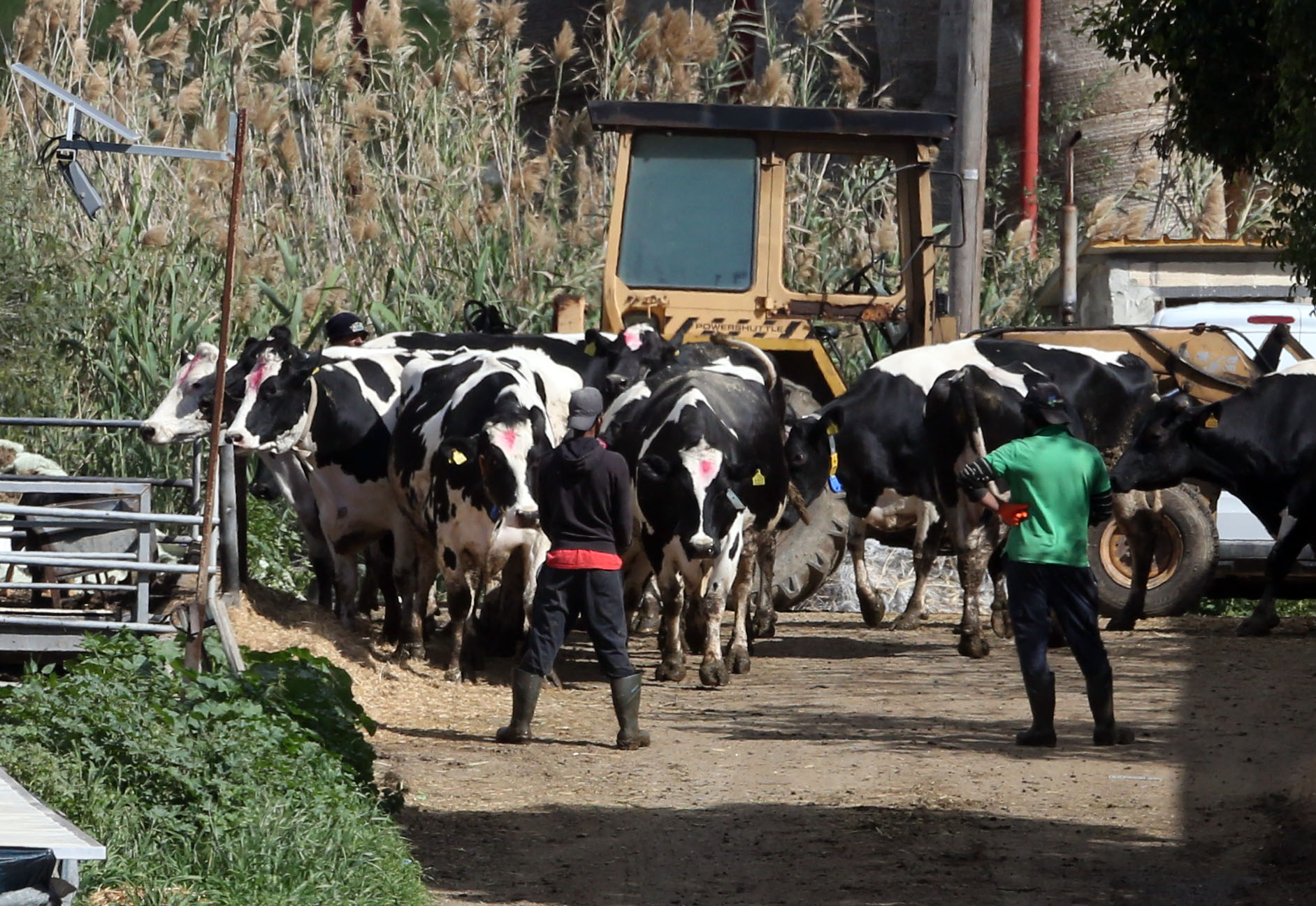
Livestock farmers remain in dispute with the government over compensation linked to the foot and mouth disease outbreak, with representatives warning that protests remain possible if concerns are not addressed.
Speaking on Wednesday following negotiations with Agriculture Minister Maria Panayiotou the night before, spokeswoman for the association “voice of the livestock farmers” Stella Petrou said disagreement over compensation measures continued despite ongoing discussions between the ministry and farming groups.
“When the discussion came to the compensation issue, we remain at loggerheads,” Petrou informed the Cyprus News Agency, adding that farmers had not been properly informed about how payments had been calculated.
“As the voice of the livestock farmers, we do not accept that the compensation package will be able to deliver what they suggest,” she said.
The cabinet-approved package includes five support measures covering compensation for culled animals, income support for up to 12 months for farmers wishing to restart operations, restructuring support for farms with high genetic value animals, coverage of feed costs during recovery periods and the appointment of a state officer for each affected farmer.
Compensation for culled animals ranges from €47 to €420 for sheep and goats, €150 to €2,500 for cattle and €35 to €5,000 for pigs, with payments determined according to age, gender, genetics and other criteria.
Panayiotou confirmed earlier on Wednesday that payments would begin immediately and that the government aimed to complete all eligible payments within May.
President Nikos Christodoulides said the compensation package was “up to 200 per cent higher” than equivalent payments in other European countries, which he attributed to the government’s fiscal policy.
Petrou however insisted that though the compensation package may appear comparatively high against payments in other European countries, farmers could not support the framework without clear details on the criteria used for each category of animal.
“The amount of compensation is quite high compared to other European countries, but without knowing the criteria and what they give for each animal more clearly, we cannot say that we are happy,” she said.
Petrou also criticised the make up of advisory committees involved in the process, arguing that livestock farmers were underrepresented.
“Those who decided on the compensation are not livestock breeders. Most of the members of the committees were agronomists and farmers,” she said.
The association was due to meet in Choirokitia on Wednesday evening at 8pm to brief members on recent contacts with the ministry and discuss possible next steps, including whether further demonstrations should take place.
Asked about new protests, Petrou affirmed that mobilisations remain a viable response yet assured that such action would only be implemented as “a last resort”.
The group also raised concerns over the handling of animal burials following culls linked to the outbreak.
Petrou alleged that disposal procedures were not being carried out according to official protocols.
“We cannot ask for protocols for the killing of animals and when we bury the animals, no protocol is applied,” she said.
She claimed burial pits in some areas were too shallow and warned of environmental and public health consequences as temperatures rise.
“We will have a problem now that summer has started. In the Athienou area, the stench has already started,” she said.
According to Petrou, official guidance requires animals to be buried nine metres deep and treated with lime before being covered.
“They dig six metre pits, throw them in and cover them with soil,” she said.
The association also criticised a decree due to come into force on Friday reducing the minimum proportion of goat and sheep milk required in PDO halloumi from 25 per cent to 15 per cent.
“We do not find the decree correct. We will fight for this as well,” Petrou said.
Despite the dispute, Petrou expressed optimism that the outbreak itself was nearing containment as vaccination efforts progressed.
“We are at the end of the vaccination, we are on a very good track, and we believe that the killings will stop,” she concluded.



Click here to change your cookie preferences