
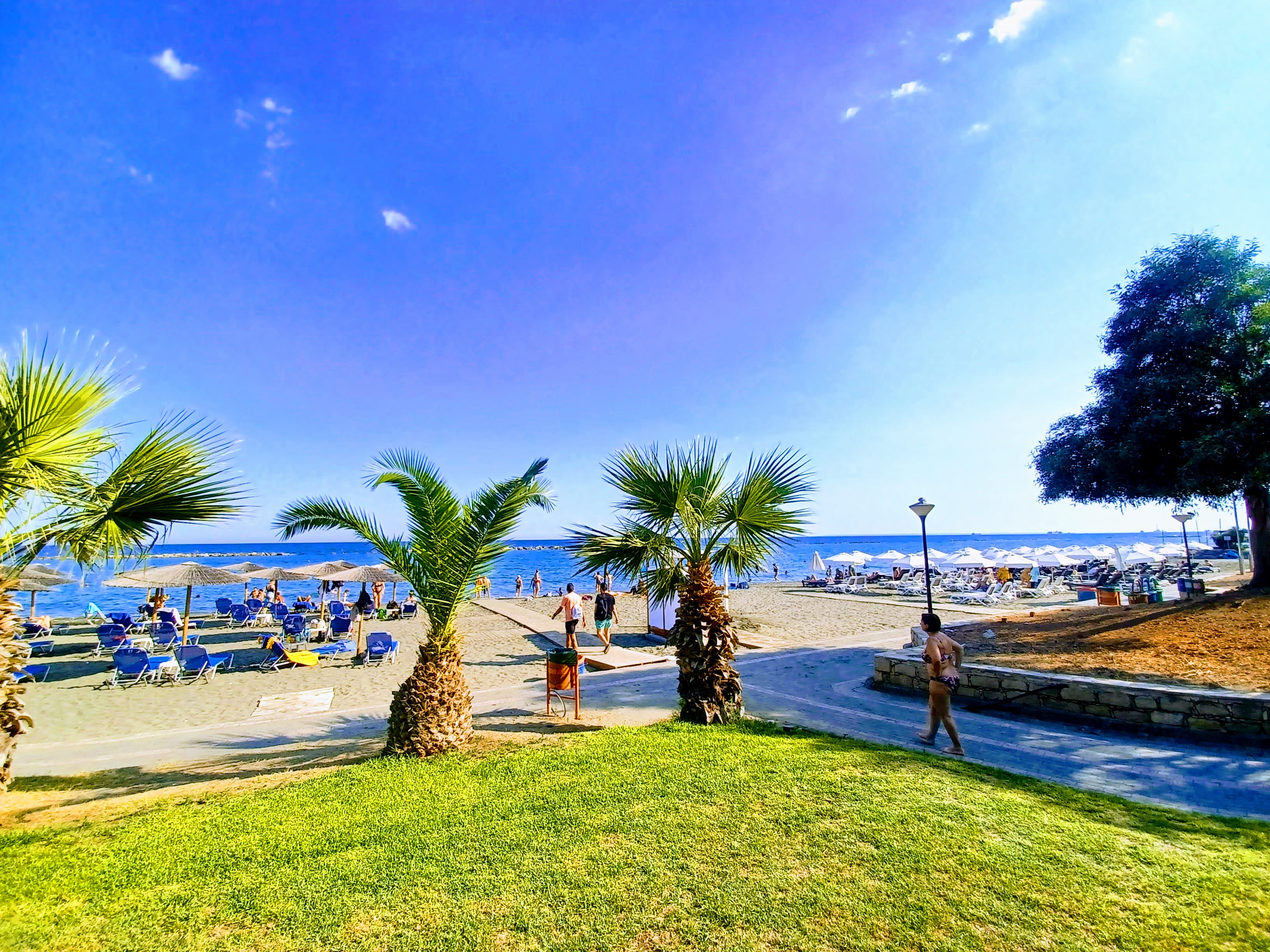
Speaking on CyBC’s daytime show ‘Apo Mera se Mera‘, Michaelides said the sector had come under pressure after developments in March triggered disruption across tourism, leading to mass cancellations and a sharp slowdown in bookings, particularly for hotels.
Since then, the picture has improved. Cancellation rates, he said, have now returned to more normal levels, while bookings have started moving again at a more satisfactory pace.
Michaelides warned that the recovery remains fragile. “The important thing is that reservations have started to move to a more satisfactory level,” he said.
He added that they are still “lower than they should have been for the period we are going through now”.
The index reached 54.6 points this year, marking an increase of approximately four points compared to the findings in 2024.
Despite this upward trend, the data indicates that four in ten Cypriots, roughly 38.4 per cent of the population, remain in the two lowest categories of financial wellbeing.
The findings, presented by the president of the Financial Wellbeing Institute, Panayiotis C. Andreou, categorise citizens into five distinct profiles ranging from the most vulnerable to the most thriving.
Currently, 15.4 per cent of the population is classified as financially vulnerable, while 23.0 per cent are described as financially struggling.
In a statement, the chamber expressed satisfaction with the outcome of the country’s presence at one of the world’s leading events for the defence and security sectors.
It said that Cyprus’ participation confirmed the significant progress achieved in recent years in the field of the defence industry.
According to Keve, the country’s presence demonstrated that Cyprus now possesses a competitive ecosystem of businesses developing innovative and technologically advanced end products capable of securing a place in international defence, security and space markets.
The delegation included 14 companies and one Centre of Excellence, which showcased a broad range of products, solutions and applications covering critical areas of defence and security.
The effort is not a blanket price-cutting exercise. Instead, hotels are moving carefully, with targeted offers, domestic tourism campaigns and last-minute deals aimed at filling rooms without undermining margins at a time when energy, wages and other operating costs remain high.
The pressure has been building since spring. Tourist arrivals fell sharply in March and April, after geopolitical tensions in the region hit confidence in several eastern Mediterranean destinations. May brought some relief, with arrivals reaching 455,680, down 4.9 per cent from 479,160 in May 2025, according to the Statistical Service (Cystat).
That was a marked improvement on the 30.7 per cent drop recorded in March and the 27.6 per cent fall in April. However, the first five months of the year were still 13.3 per cent lower than in 2025, leaving hotels heavily dependent on late bookings, domestic demand and a steadier flow from key foreign markets.
The Commission’s latest report on Cyprus, published in June, presents a mixed picture: an island with a strong digital base and improving public services, but one still facing gaps in digital skills, artificial intelligence uptake and cross-border digital services.
According to the report, Cyprus has extensive gigabit connectivity coverage, including in rural areas, while 5G coverage was fully achieved in 2024. It also noted that three-quarters of SMEs have reached at least a basic level of digital readiness, with businesses using advanced technologies such as cloud and data analytics.
Specifically, revenue totalled €3.8 billion at the end of May 2026, matching the 35 per cent mark recorded during the same period in 2025 when revenue stood at €3.59 billion.
Actual expenditure reached €3.7bn, corresponding to an implementation rate of 32 per cent, compared to €3.54bn or 32 per cent in 2025.
The Treasury report that total revenue has increased compared to last year, primarily driven by a rise in proceeds from indirect and direct taxes by €120 million and €110 million respectively.
The transactions took place between June 15, 2026, and June 19, 2026, on the Euronext Athens exchange.
During this five-day period, the bank successfully acquired a total of 1,735,675 own shares.
The total cost of these acquisitions amounted to €7,420,161.43, with an average purchase price of €4.2751 per share.
The purchases were executed through the bank’s investment arm, Eurobank Equities Single Member Investment Firm S.A.
On June 15, 2026, the bank acquired 310,369 shares at an average price of €4.2076, followed by 326,971 shares at an average price of €4.2532 on June 16, 2026.
The agreement, signed on Monday, June 15, 2026, focuses on the School of Economics and Political Sciences at the NKUA Cyprus branch, particularly students in economics and business administration.
Under the memorandum, K Treppides & Co Group will cover 50 per cent of the annual tuition fees of participating students and provide them with paid employment opportunities during their studies.
According to the official NKUA announcement, the company has committed to employing at least 30 students, representing more than one third of the students in the relevant departments of the Cyprus branch, while supporting their professional development in areas linked to finance, audit and advisory services.
Firstly, the regulator announced the publication of Tender No. 02/2026, which concerns the provision of expert services to support the assessment of applications and changes involving a broad range of regulated entities.
The project is aimed at assisting CySEC in handling licensing procedures and overseeing substantial changes affecting supervised companies and investment vehicles.
The scope of the tender includes support for entities operating across various sectors of the financial services industry, including investment firms, fund managers, alternative investment funds, crypto-asset service providers and crowdfunding platforms.
The in-person meeting was jointly hosted by the Embassy of the Republic of Cyprus in the UAE and the Cyprus Business Council – Dubai, in the framework of the Cyprus Presidency of the Council of the EU 2026.
It was held with the support of the Cyprus Trade Centre in the GCC Region, based in Dubai, and the European Union Delegation to the UAE.
The meeting brought together EU business representatives for an exchange of views on the current situation in the UAE and the wider region, with discussions also focusing on resilience, commercial cooperation and the role of the EU Business Forum across key sectors.
The 16th annual awards ceremony was held in Athens, bringing together representatives from the technology and innovation ecosystem, the National Bank in Greece and Cyprus, investment organisations, chambers of commerce and universities.
The event also featured champion swimmer Apostolos Siskos, who spoke about his remarkable career journey.
Meanwhile, Wealthyhood chief executive Alexandros Christodoulakis shared his experience as the winner of last year’s competition and reflected on the progress achieved since securing the distinction.
A total of 12 teams and companies were recognised in this year’s competition, representing sectors including healthcare, artificial intelligence, fintech and sustainable development.
The agreement, announced on June 22, 2026, and signed with the BCM Group, covers the first nine years of mining operations and represents the largest operational contract to date for the project, signalling a further step towards full-scale production.
The development carries direct implications for Mithril Royalties, which is headquartered in Cyprus and holds a $10 million gold royalty over future output from Tulu Kapi, giving it structured exposure to revenues generated by the mine once production begins.
Specifically, the Cyprus-based IT distributor, commonly known as Asbis, announced that its estimated consolidated revenues for the month amounted to approximately $604 million.
This performance represents an increase of approximately 89 per cent compared to the revenues recorded in May 2025, which stood at $320 million.




Click here to change your cookie preferences