
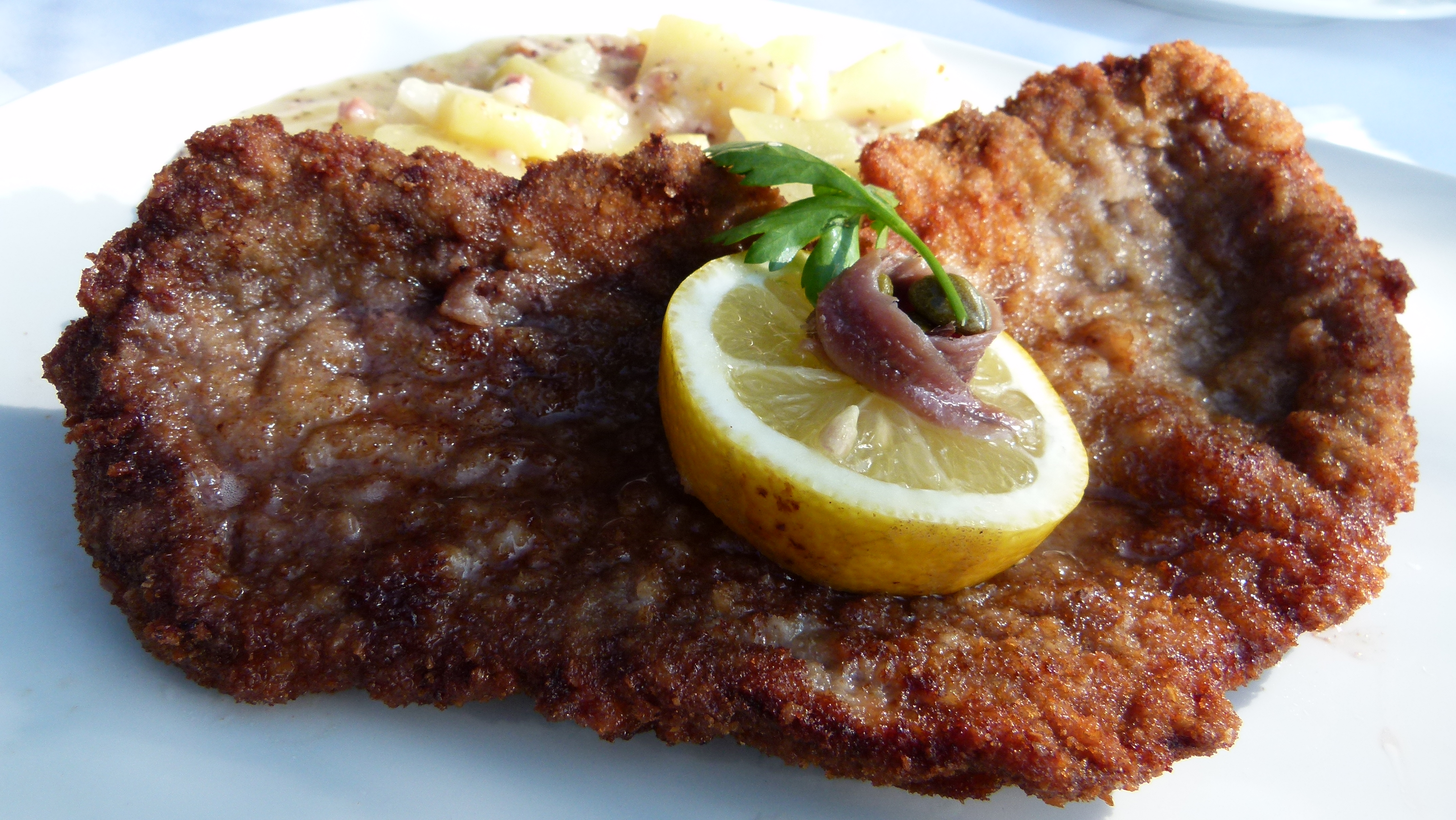
Schnitzel – the golden, crisped cutlet that has become one of Austria’s most recognisable dishes – has origins that reflect a long history of culinary exchange across Europe. While it is now firmly associated with Austrian cuisine, its roots are often traced back to earlier traditions of breaded meat introduced to Central Europe through Italian influence, particularly the Milanese cotoletta. By the nineteenth century, the dish had been adopted and refined in Vienna, where it evolved into what is now known as Wiener Schnitzel.
Wiener Schnitzel is traditionally made from veal, which is thinly sliced, tenderised, coated in flour, egg and breadcrumbs, and then fried in butter or oil until crisp and golden. Its preparation reflects the Viennese emphasis on precision and balance, producing a cutlet that is light yet richly flavoured. The breadcrumb coating, which puffs slightly during frying, is key to its distinctive texture, while the meat remains tender and delicate inside.
During the Habsburg Empire, Wiener Schnitzel became a staple of Viennese cuisine, symbolising refinement. It was served in both aristocratic households and urban restaurants, reflecting its versatility and widespread appeal. Over time, it became a national dish of Austria, closely associated with Viennese café culture and traditional Gasthäuser, or inns, where it remains a menu essential.
As the dish spread across Central Europe, regional variations developed. In Austria, strict definitions are maintained, with “Wiener Schnitzel” reserved for veal, while pork versions are typically labelled differently. Accompaniments also vary, though it is commonly served with potato salad, parsley potatoes, or lingonberry jam, which provides a sweet contrast to the savoury crust.
In Cyprus, schnitzel is widely known through European influenced restaurants and hotel menus, particularly in tourist areas. It is typically prepared with pork or chicken rather than veal, reflecting local availability and preferences.
Seasonally, schnitzel is enjoyed throughout the year in Austria, though it is especially popular in cooler months when rich, fried dishes are more comforting. It also appears frequently in summer beer gardens, where it is paired with light salads and cold drinks, demonstrating its adaptability across seasons and settings.
From its disputed origins to its status as a defining symbol of Austrian cuisine, schnitzel represents both tradition and transformation.




Click here to change your cookie preferences